Welcome to DEDON

We have noticed that you are accessing our website from a location within North & South America. For accurate product information, we kindly request that you visit our Americas (US) website.
Back to EN-US
Knitting is building
Gaspard Fleury-Dugy, the acrobat designer

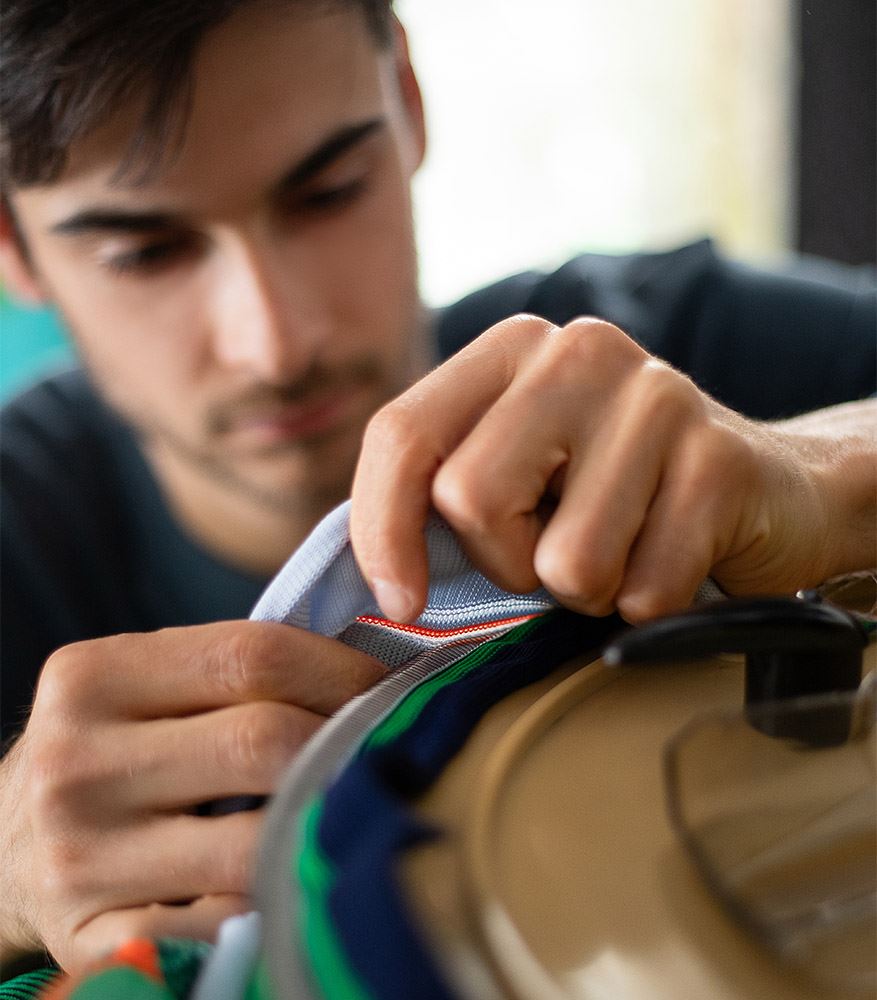
“I try to go from thread to volume without going through the surface.” Trained at École Duperré in Paris and then at the Swedish School of Textiles, Gaspard Fleury-Dugy pushes the knitting machine all the way to objects, and then to furniture. A finalist at Design Parade 2026, with a solo show now open in Kortrijk, he talks about his path, his relationship with thread, and what connects him to DEDON.

"You knit a little the way you would use a 3D printer."

Who are you, and where do you come from?


GFD  I’m a textile designer. I work with the know-how that textile design encompasses: colour, rhythm, and everything to do with making textiles, so knitting and weaving.


You trained in France and then in Sweden. What did those two schools give you?


GFD  I trained at École Duperré, then did a master’s at the Swedish School of Textiles in Sweden. They were two cultures and two very different visions of textiles. It was really interesting to be able to look at what I was learning, and at the techniques, from two quite different angles, each of them rich.


Was there a defining encounter along the way?


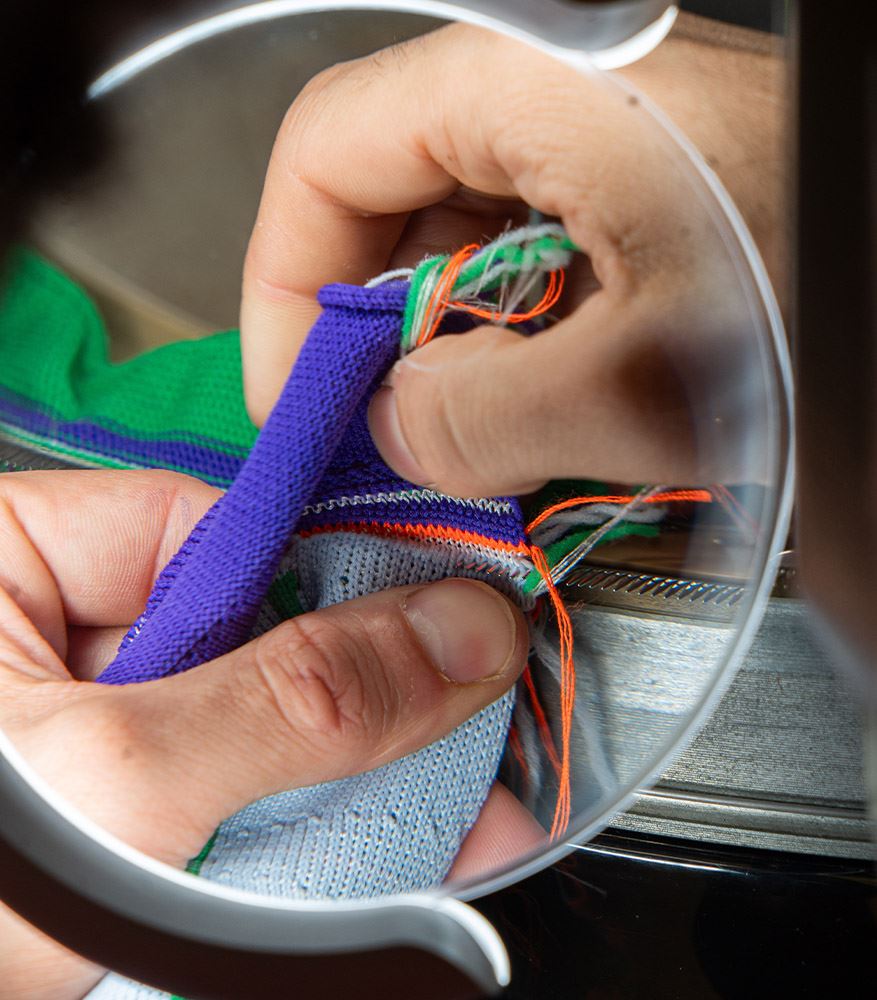
GFD  The defining encounter was the technique of knitting itself. It started with manual knitting machines. When I saw the brilliant potential in those machines, I quite quickly moved on to industrial knitting machines. That’s where it all began, where I started generating my first volumes, my first forms, little by little.
When people think of knitting, they think of a flat surface. How did you get to volume?


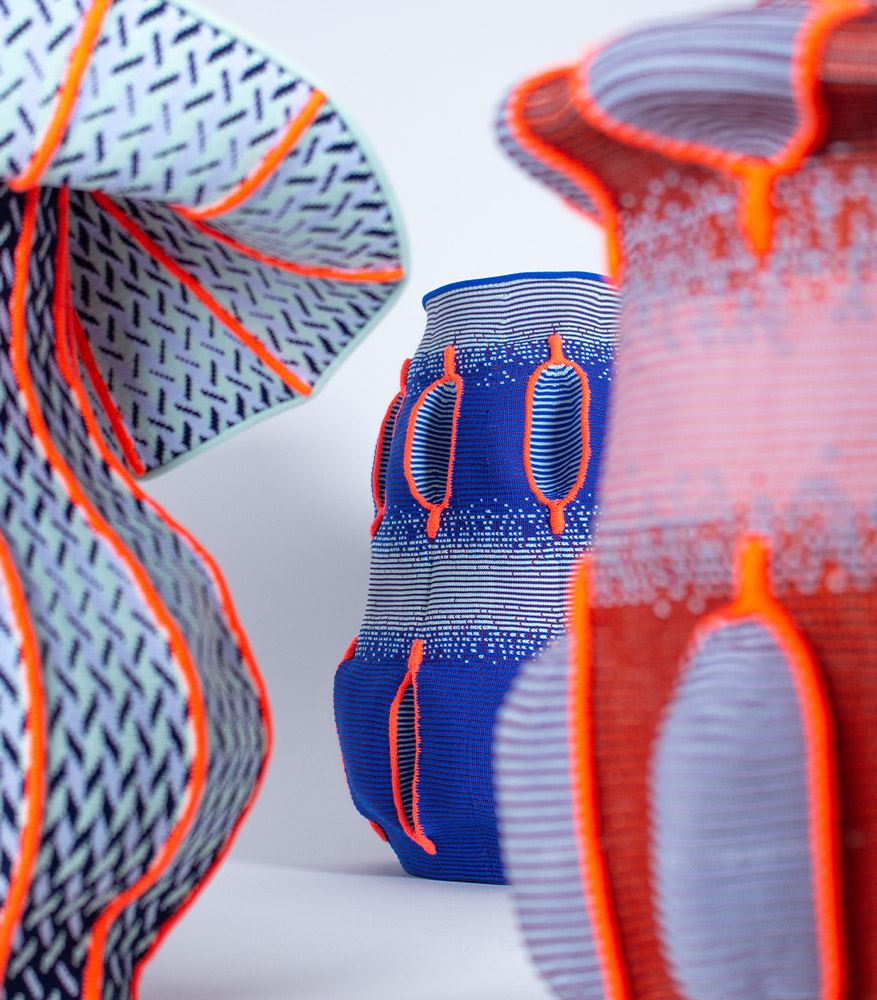
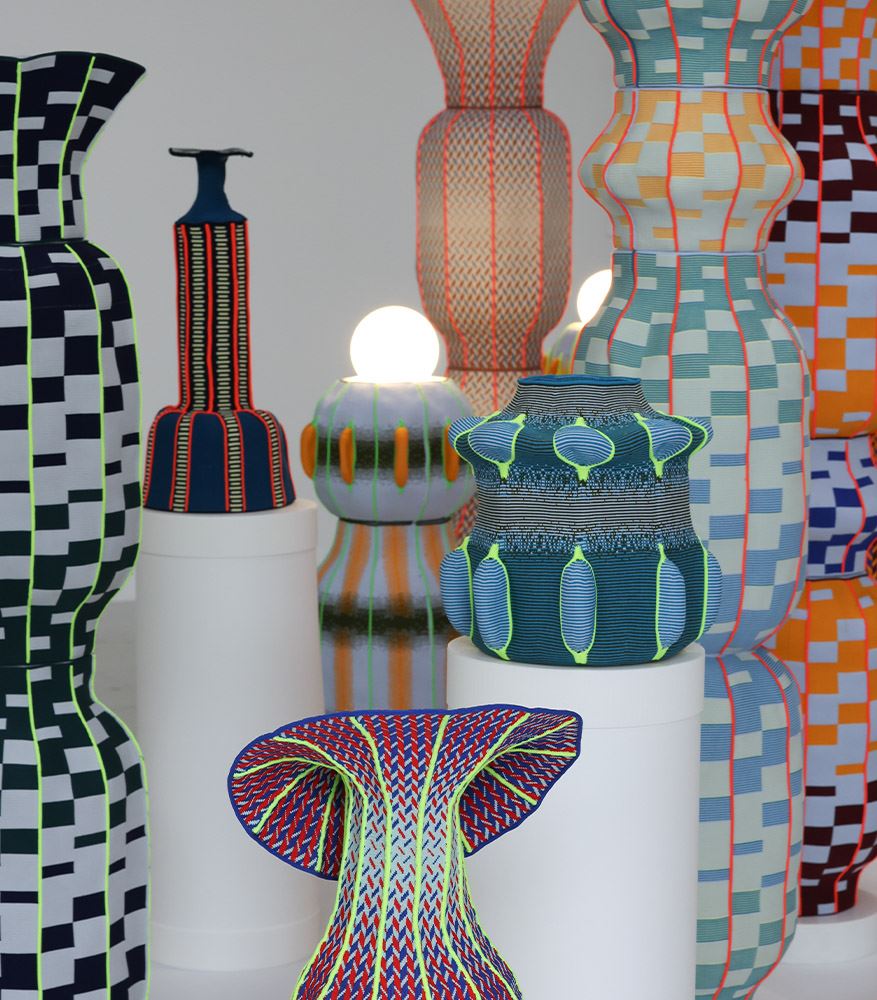
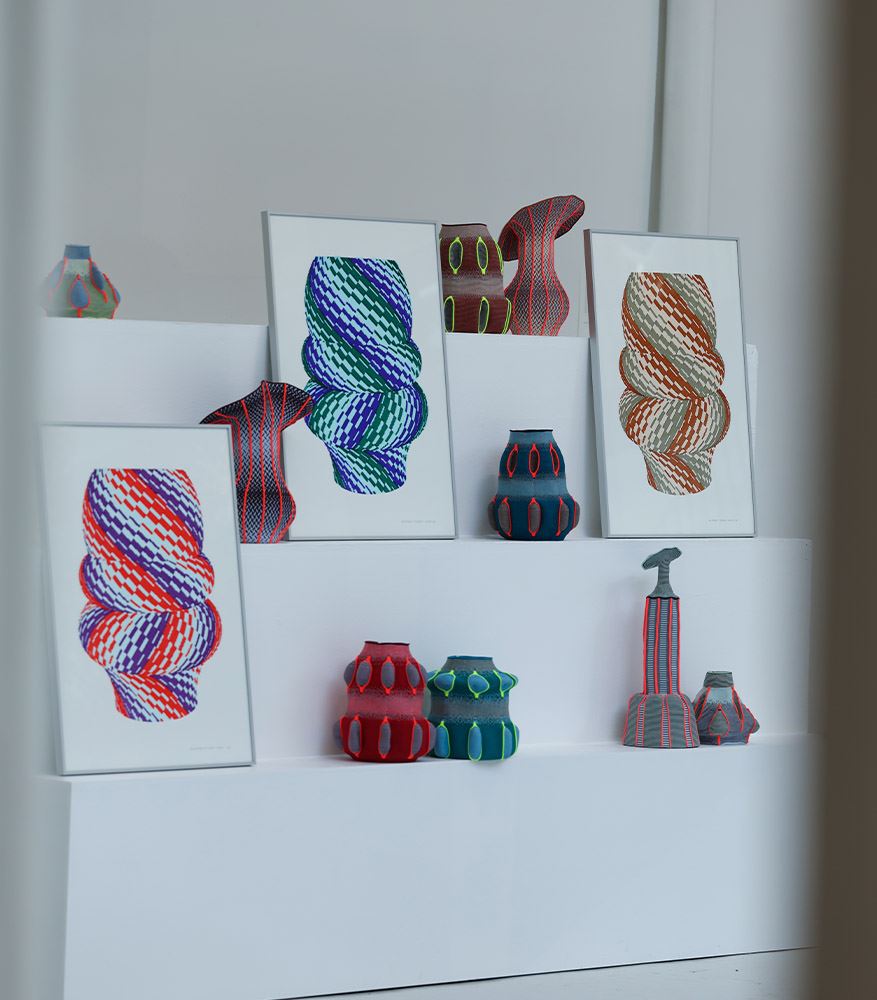
GFD  When you think of knitting, you picture a grandmother’s knit, quite thick. In fact, you can make very fine things, and you can even get volume. You knit a little the way you would use a 3D printer. That’s the technique I took hold of, to create something a bit new in the volumes and in the way the forms I knit are generated. You could say it’s a way of pushing the knitting machine towards a new way of making, and so towards a new materiality for the objects around us.


What is your relationship with thread?


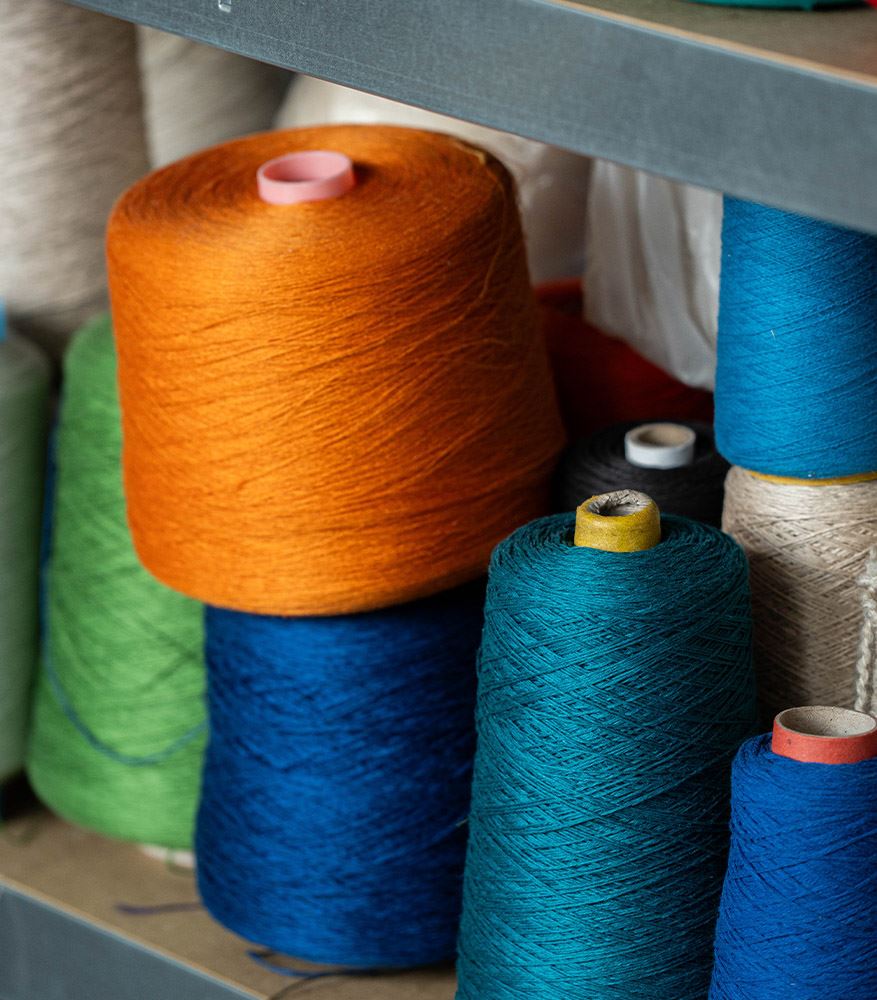
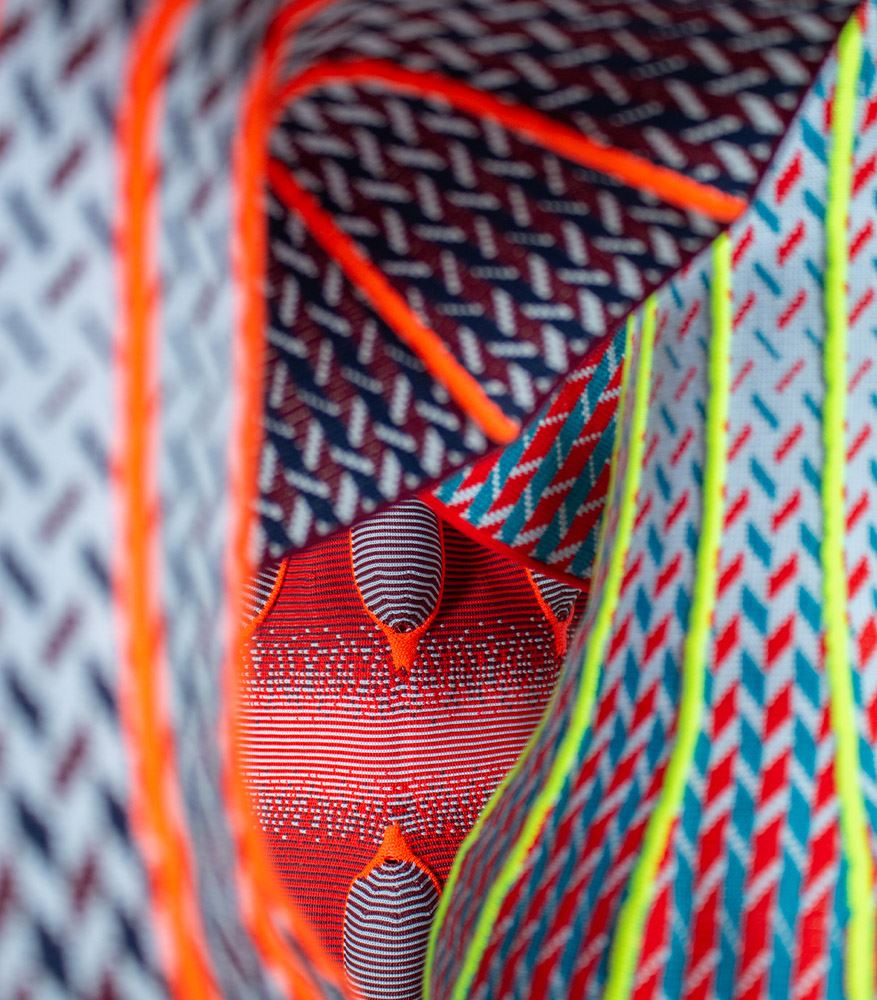
GFD  Thread is really where everything begins. We have lots of expressions for it: the thread of a story, pulling the thread. It’s my main material. The textile designer’s craft is knowing how to go from thread to surface. I wanted to go a little further: I try to go from thread to volume without going through the surface. And colour is not at all the same depending on the material. With polyamide, I get a colour that can be very saturated, whereas with linen thread, the colour is much more muted, much more nuanced.

Your first pieces were entirely textile. Today you combine other materials. Why?


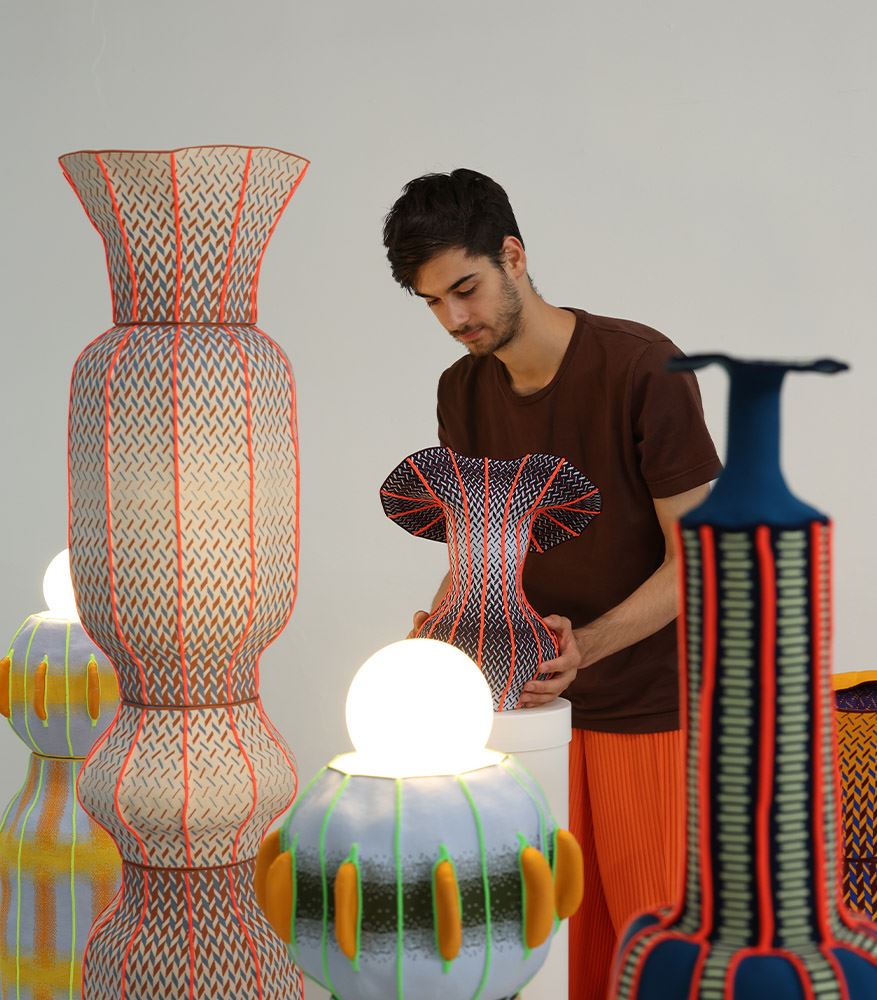
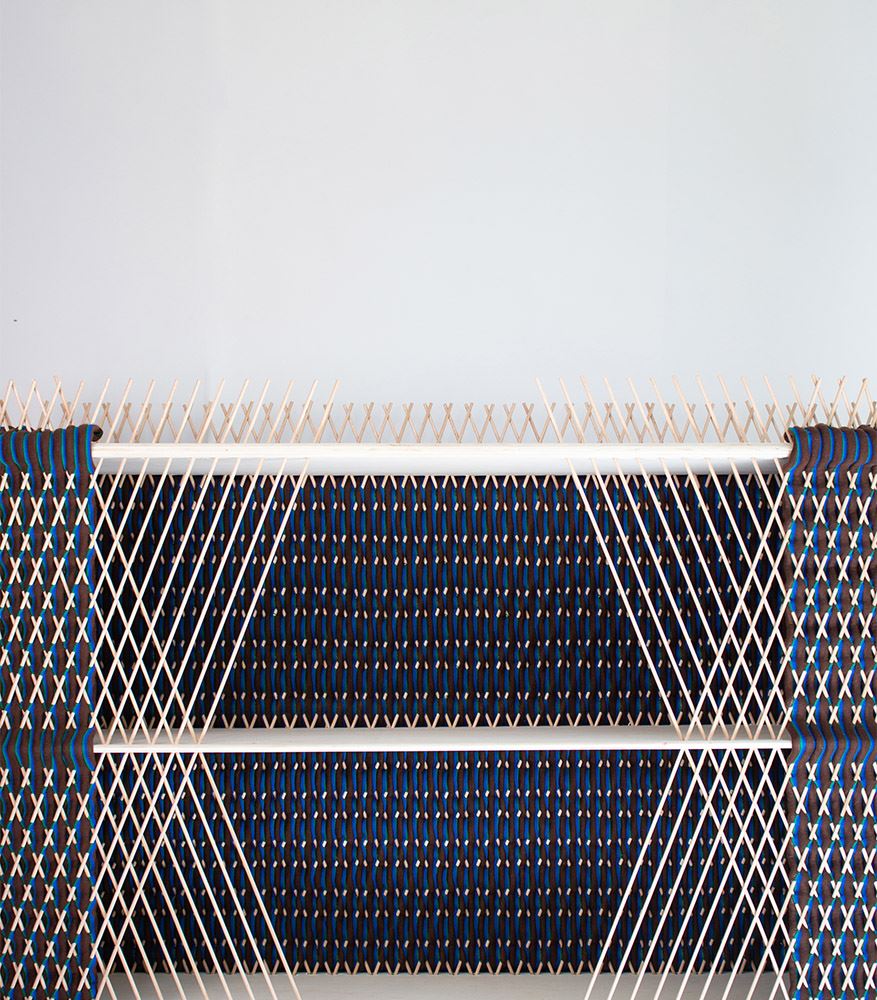
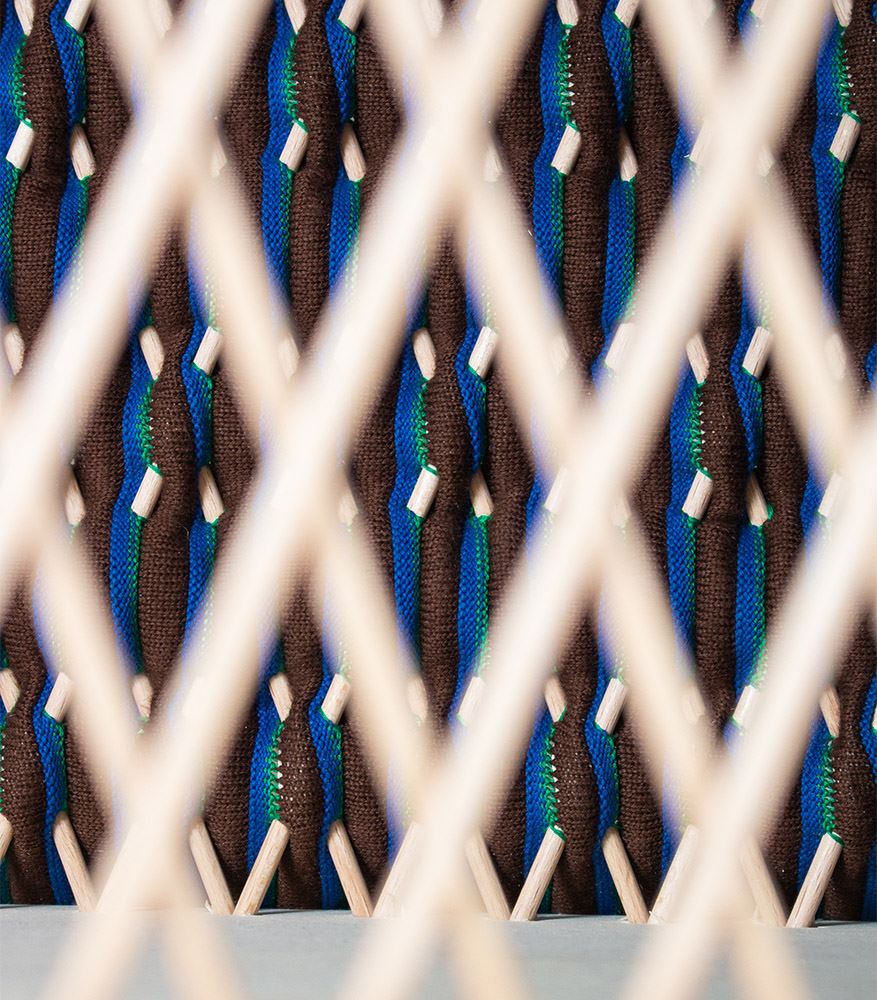
GFD  In my work there’s a real desire to free textiles. Textiles are often seen as a covering, a finishing material: on a sofa, they cover a structure that already exists. I want the textile to be the structure itself. The first pieces that made my name were entirely knitted vases, with no structure inside: it’s the thread, the knitting technique, that gives the object its structure. It’s a bit like folding a sheet of paper: the fold stiffens one part. I wanted to move up in scale, but without a frame, that’s really difficult. So I set up a dialogue between wooden reeds and a knitted material. The result is quite a singular material, where textile and wood become one. We’re not covering the wood with textile: it’s a material where the two coexist.

“I want the textile to be the structure itself.”

That’s the Toron collection, shown at Design Parade. What did that moment mean to you?


GFD  I was lucky enough to be selected as a finalist for Design Parade, the 2026 edition. It was a real chance to be part of the festival, to meet the people behind it, the public, professionals, and to present my work to a jury of renowned experts. It was there that I showed the Toron collection for the first time, a collection of objects and furniture that brings wooden reeds and cotton knit into dialogue.

Your pieces stand out for their colour. Where does it come from?


GFD  My relationship with colour is quite joyful and intuitive. People often ask me if I have a recipe for colouring my objects. In fact, it’s mostly my eye wandering, finding colour combinations in nature or in the places I visit. I have a strong appetite for South American cultures, for all the joy they bring to using colour.

“I often say that knitting is building.”

How did you meet DEDON?


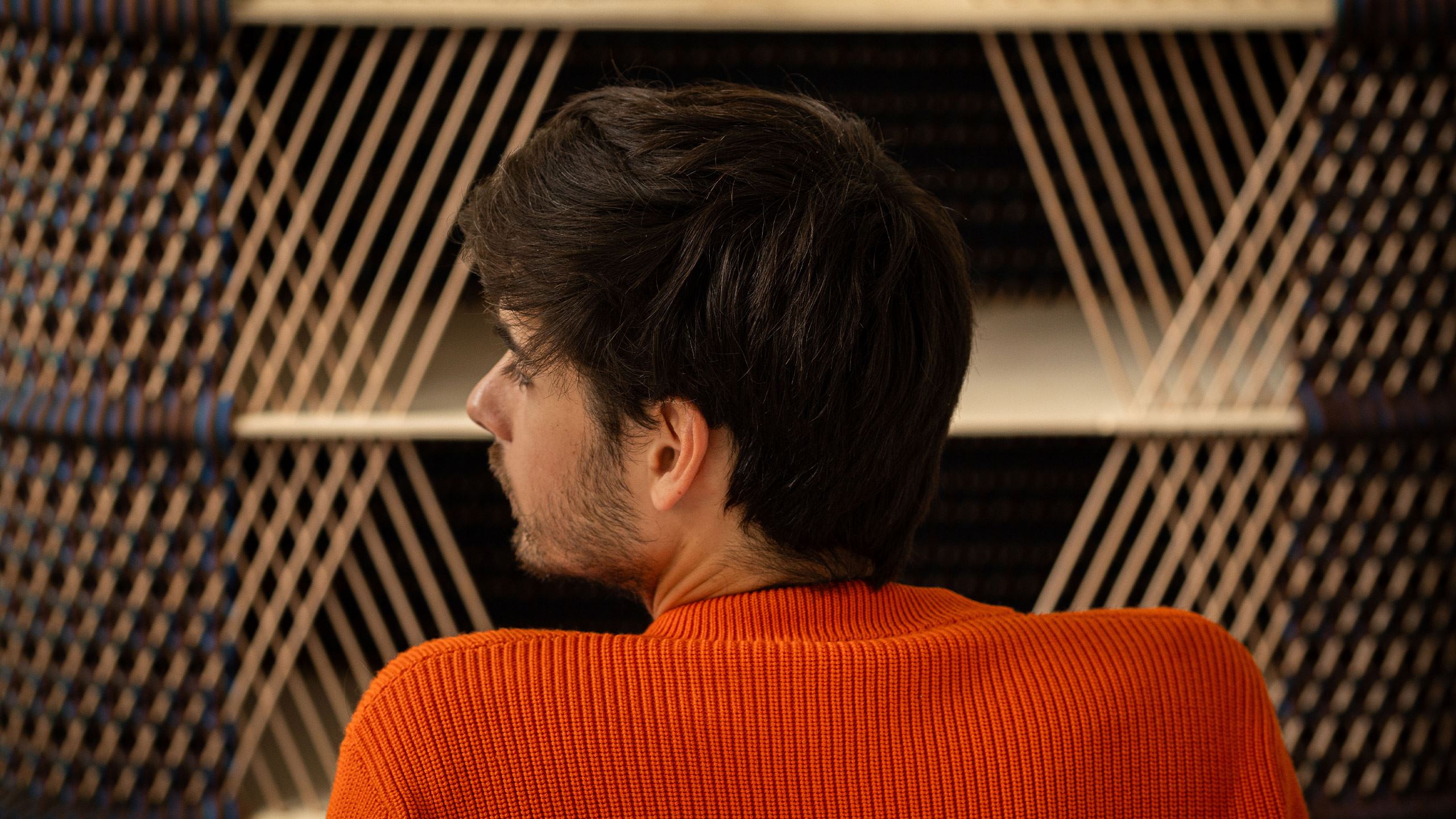
GFD  It was a brand I didn’t know, and I was lucky enough that they contacted me. I found the parallels between our two practices quite interesting. I see a strong link in the desire to make textile techniques structural. What I find interesting about DEDON is that they manage to preserve manual craftsmanship, especially hand weaving. These are skills that require both strength and precision. Preserving that is something I also try to do in my own work: a coexistence. I always place myself on the border between manual techniques, ancestral know-how, and much more contemporary techniques such as virtual reality or computer programming.

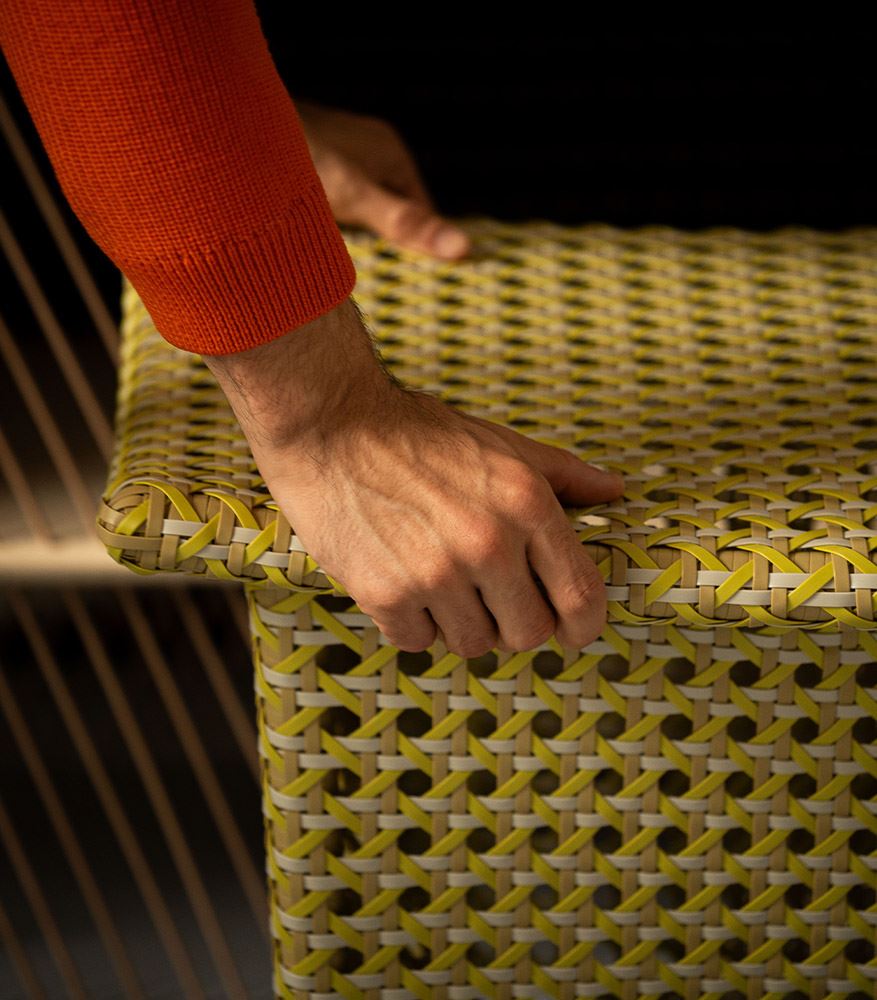
For this interview, you chose to sit on a DAYDREAM side table. Why this piece?


GFD  First, I find it quite fun to use it differently, and it turns out it’s very comfortable as a seat. What I like about this piece is that a traditional pattern, caning, is taken up and almost wraps around the whole piece. That’s an approach I also use a lot in my work: taking traditional patterns and recolouring them in a slightly unexpected way. I also love the subtle work on colour. I find that our interiors today can be a little cold in terms of colour.

"I love the acrobat’s stance: constantly finding a new balance, but also allowing yourself to lose your balance in order to go and find new things.”

How would you define yourself?


GFD  I like to define myself from the acrobat’s point of view. I’ve been doing circus, and trapeze in particular, for a very long time. I love the acrobat’s stance: constantly finding a new balance, but also allowing yourself to lose your balance in order to go and find new things. I try to apply that to my design work. I often say that I’m an acrobat designer.

Handmade and technology: how do you bring them together?


GFD  What drives me is research and constant experimentation. In textiles, you learn a lot through experimentation, but also through variation: one sample leads to another, you change a thread, you change a parameter, and each time you multiply the possibilities. What I love is the coexistence, the mix between traditional crafts and the help we can get from software, from new ways of shaping things. I’m quite convinced that traditional crafts shouldn’t be left only to those who conserve them. I love pushing them, constantly, to see how far we can go.


“Traditional crafts shouldn’t be left only to those who conserve them.”


How would you define yourself?


GFD  I like to define myself from the acrobat’s point of view. I’ve been doing circus, and trapeze in particular, for a very long time. I love the acrobat’s stance: constantly finding a new balance, but also allowing yourself to lose your balance in order to go and find new things. I try to apply that to my design work. I often say that I’m an acrobat designer.

With no budget constraints, what project would you dream of making?


GFD  If I could really dream, and dream on a bigger scale, I’d like to work at the scale of architecture, in partnership with architects, and maybe also at the scale of a room. I’d like to knit a room, to knit the second skin of a room. I often say that knitting is building, and I’d like to apply that at the scale of the home.

Downloads