A DEDON chair and certain contemporary facades answer the same question: how a supple skin can dress a rigid frame. On one side, a frame and a hand-woven fiber. On the other, a load-bearing structure and an envelope. In both cases, the weave decides what passes through: air, light, sightlines.
WHEN ARCHITECTURE IS WOVEN
Philippine Pavilion, Expo 2025 Osaka, Carlo Calma Consultancy
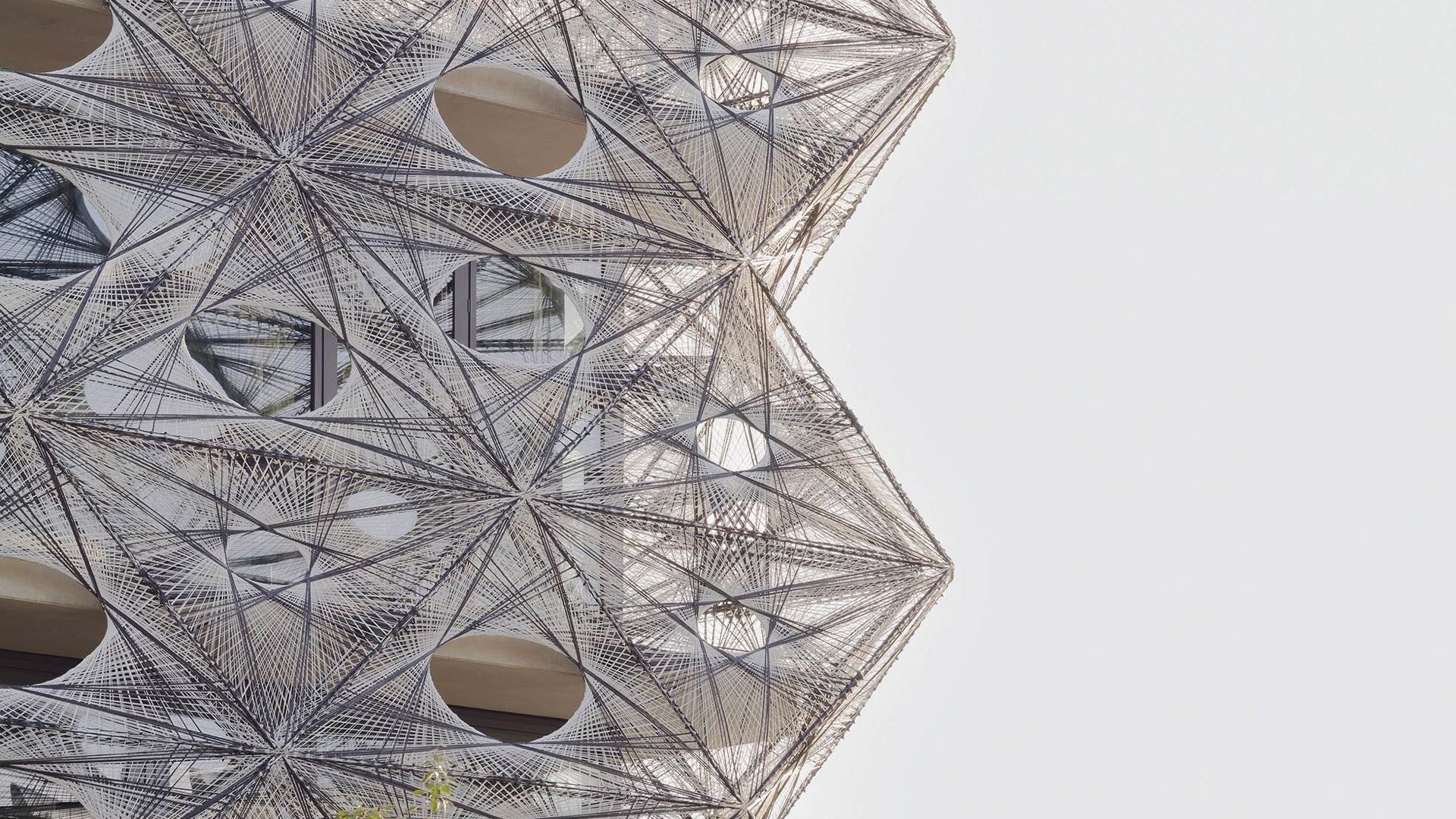
In Osaka, Carlo Calma Consultancy’s Philippine Pavilion wears its facade like a textile: 212 panels handwoven by communities from all 18 regions of the archipelago, mounted on a rattan grid. An envelope that breathes with the wind.
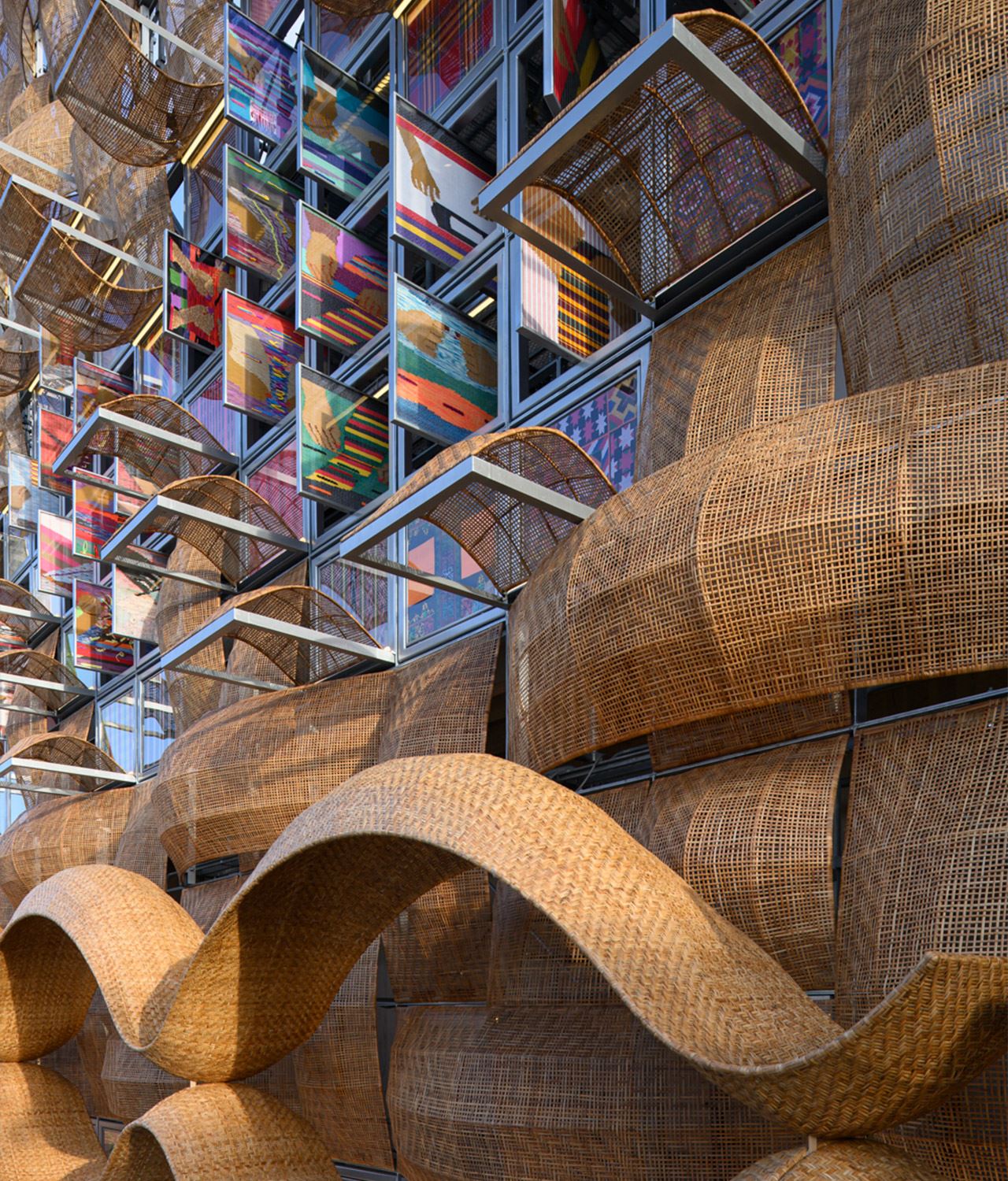
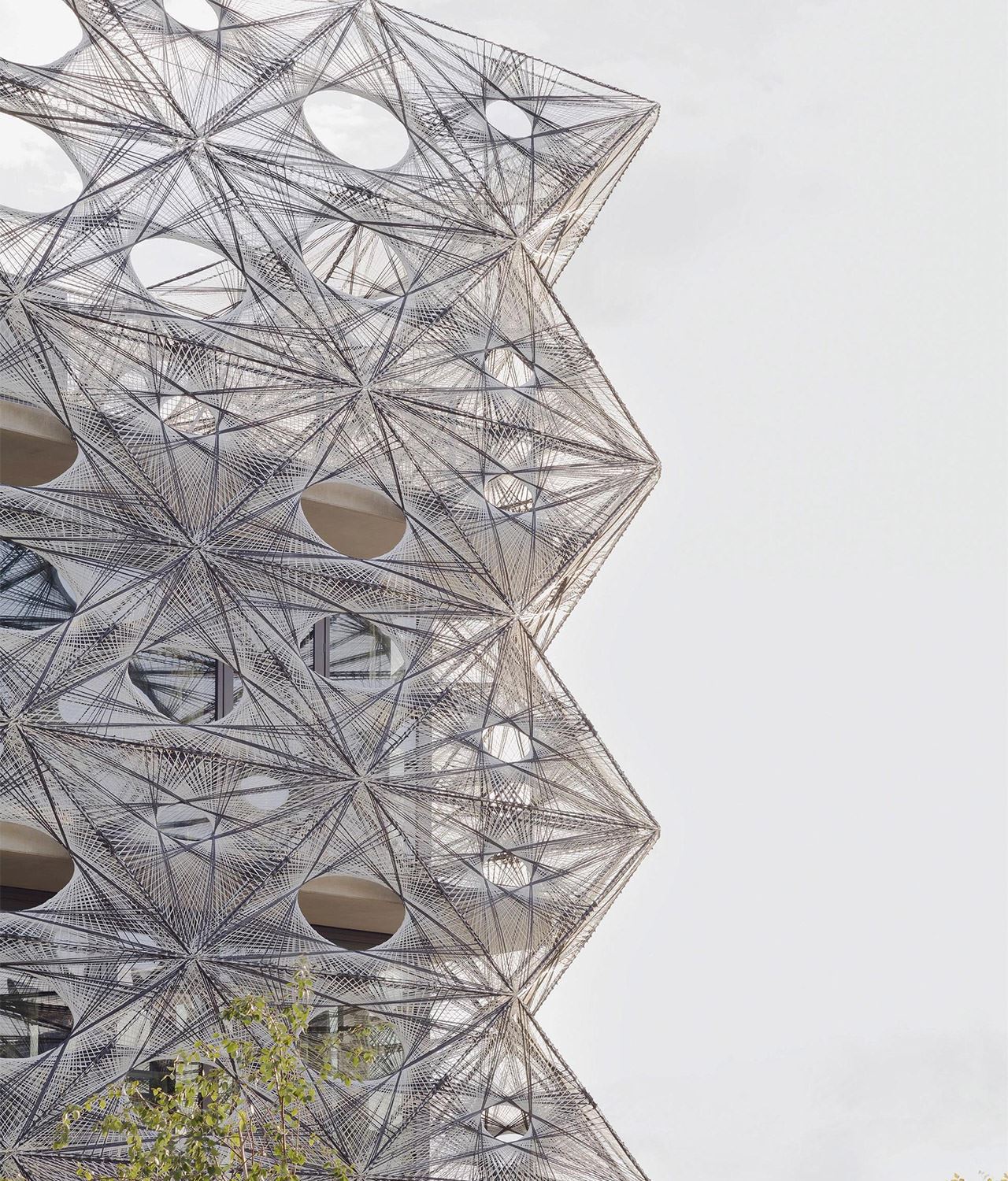
Texoversum, Reutlingen, allmannwappner + Menges Scheffler Architekten + Jan Knippers Ingenieure
In Reutlingen, the Texoversum’s facade is made of robotically wound glass and carbon fibers, in self-supporting modules. For the textile school it houses, allmannwappner, Menges Scheffler and Jan Knippers turned the envelope into a demonstrator: weaving changes tools, not logic.
Chrysalis Entrance Pavilion
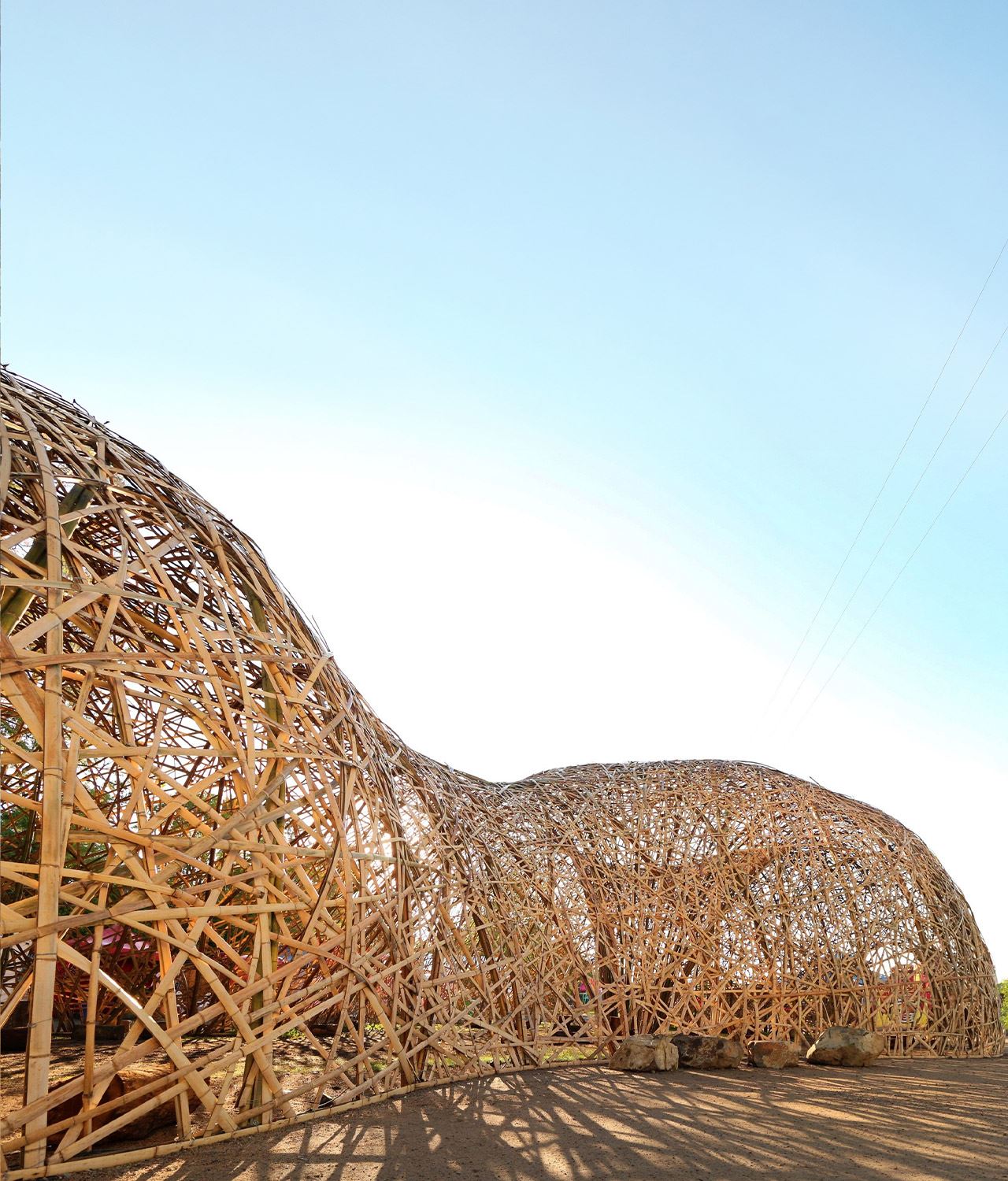
At the gateway to Australia’s Woodford Folk Festival, Cave Urban and a team of volunteers wove 450 m² of locally harvested bamboo into a shaded pavilion. Here the weave filters the sun and keeps the space cool.